Michigan commercial roofs should typically be inspected by a professional twice per year, once in spring and once in fall. Additional checks may make sense after a severe storm or when damage is suspected. Facility teams should document visible concerns from safe ground level areas and contact a qualified commercial roofer.
A commercial roof protects more than a building. It protects people, equipment, inventory, operations, and the budget tied to keeping a facility running.
For Michigan facility managers, routine inspections can help identify minor concerns before they become more disruptive repair needs. A professional inspection can also support warranty alignment, maintenance planning, and capital budgeting by creating a documented record of roof conditions.
That documentation matters because commercial roofs are exposed to seasonal stress. Snow, ice, wind, debris, ponding water, rooftop equipment traffic, and temperature swings can all affect how a roof performs. A clear inspection rhythm gives facility teams a better way to plan repairs, manage risk, and reduce reliance on emergency calls.
For more planning guidance, visit Schena Roofing’s commercial roofing resources.
How Often Commercial Roofs Should Be Inspected In Michigan
Most Michigan commercial roofs should be professionally inspected twice per year. A spring inspection helps assess how the roof handled winter conditions. A fall inspection helps prepare the roof before snow, ice, and colder temperatures return.
This semiannual cadence works well for many commercial facilities because it lines up with Michigan’s most important seasonal transition points. Spring inspections can reveal issues related to freeze-thaw movement, ice, drainage, and winter debris. Fall inspections can help identify concerns before they are hidden by snow or made harder to address by colder weather.
Additional professional checks may make sense after a severe storm or when damage is suspected. For example, a facility team may notice interior moisture, visible displaced metal from the ground, damaged gutters, or signs that wind affected part of the roof edge. In those cases, facility teams should document what can be seen from the ground or inside the building and schedule a professional assessment.
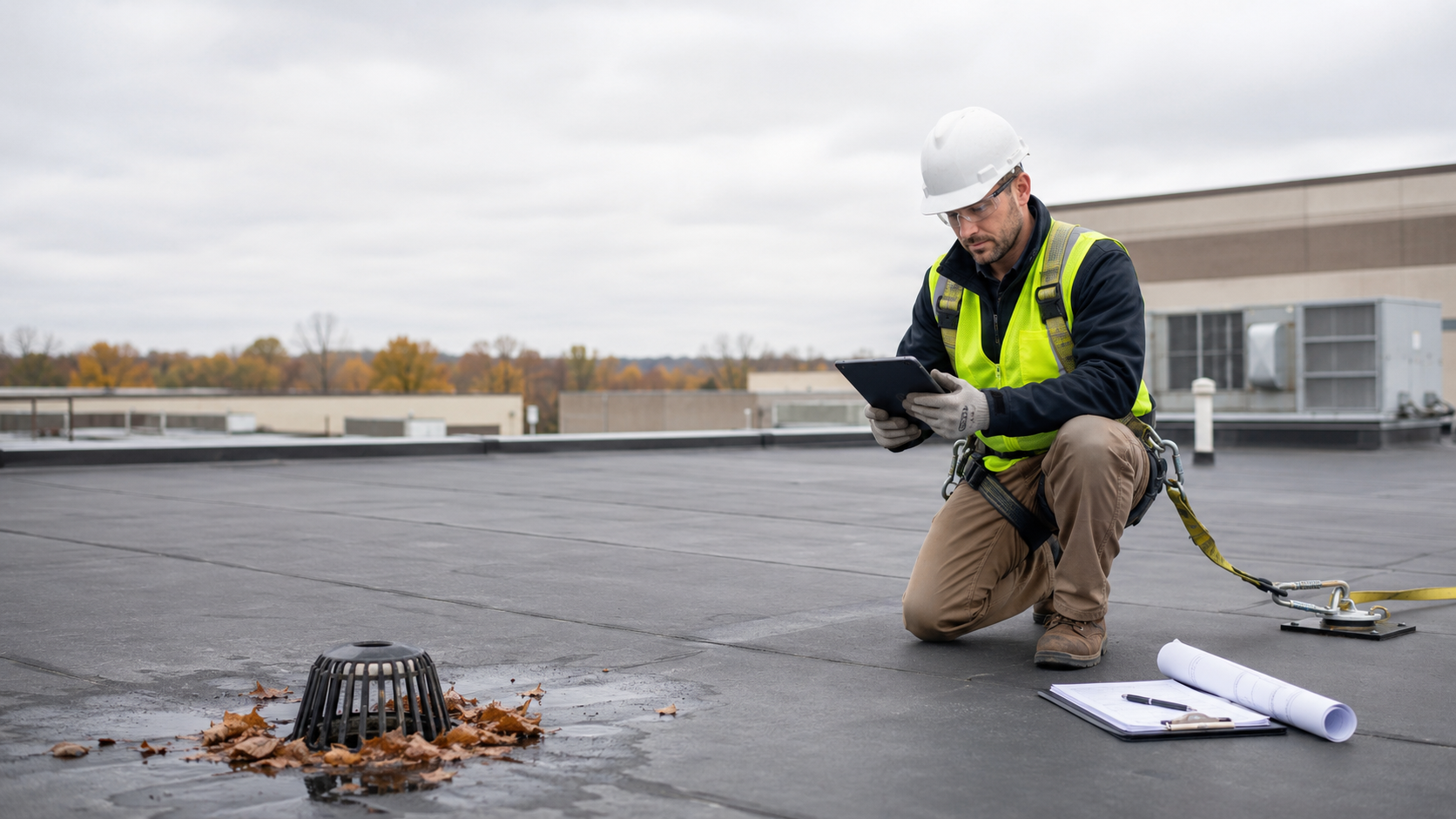
Facility managers should avoid walking the roof unless they are trained, authorized, and using proper safety procedures. The better approach is to keep records, note changes, take safe photos from ground level when possible, and bring in a qualified commercial roofer.
Schena provides commercial roof inspection and maintenance in Michigan for facilities that need routine assessments, leak investigation, maintenance planning, and repair recommendations.
Why Seasonality Matters In Michigan
Michigan weather puts commercial roofs through repeated expansion, contraction, moisture, and drainage stress. That makes inspection timing more important than checking the roof only after a problem becomes obvious.
Spring is a valuable time to inspect because winter can leave behind hidden wear. Snow and ice can sit on low-slope roof areas, and freeze-thaw cycles can stress seams, flashings, penetrations, and previous repair points. As temperatures rise, water movement changes quickly, which can reveal drainage concerns that were not obvious during winter.
Fall inspections are equally important because they help prepare the roof before colder conditions return. Debris from leaves, branches, and nearby trees can collect near drains, scuppers, gutters, and downspouts. If water cannot move off the roof properly, ponding and ice-related concerns may become more likely during winter.
Wind exposure also matters across Michigan. Roof edges, coping, perimeter metal, and membrane attachment areas can experience added stress during high-wind events. A professional inspection can help identify visible signs of movement, loosened components, or areas that may need attention.
Rooftop equipment traffic paths should also be part of the inspection conversation. HVAC units, service access points, curbs, gas lines, electrical lines, and walkway pads can create recurring wear areas. A quality inspection should review whether these areas show signs of damage, compression, punctures, loose flashing, or drainage interference.
Facilities in Southeast Michigan can learn more about local commercial roofing support through Schena’s Detroit commercial roofing services. Facilities in West Michigan can review Schena’s Grand Rapids commercial roofing services.
What A Quality Commercial Roof Inspection Typically Includes
A quality commercial roof inspection should be practical, documented, and focused on conditions that affect performance, repair planning, and future budgets. It should not be a quick glance at the roof surface.
A professional inspection typically includes these review points:
- The roofer should review the roof membrane for visible wear, punctures, open seams, blisters, splits, or other surface concerns.
- The roofer should inspect flashings, terminations, wall transitions, curbs, and penetrations for signs of movement or deterioration.
- The roofer should evaluate drains, scuppers, gutters, and downspouts for debris, blockage, deterioration, or signs of poor water movement.
- The roofer should look for ponding water indicators, staining, sediment patterns, or low areas that may need further attention.
- The roofer should assess edge metal, coping, fascia, and perimeter details for signs of displacement, loose components, or wind-related stress.
- The roofer should inspect rooftop equipment areas, including HVAC curbs, service paths, and nearby membrane conditions.
- The roofer should review walkway pads and access routes for wear patterns caused by regular service traffic.
- The roofer should document previous repair areas and note whether those repairs appear to be performing as expected.
- The roofer should connect visible roof conditions with interior leak reports or moisture concerns when those issues are known.
- The roofer should provide photo documentation, repair recommendations, priority levels, and practical next steps.
The final report should help a facility team understand what needs attention now, what can be monitored, and what may need to be planned for in the next budget cycle.
How To Prepare For A Commercial Roof Inspection
Facility managers can prepare for a roof inspection without walking the roof. The most helpful preparation usually comes from documentation, safe observation, and clear communication with the roofing contractor.
Before the inspection, gather any roof records that can help the roofer understand the building. These records may include warranty information, past inspection reports, repair invoices, leak logs, photos, roof plans, and notes about recurring problem areas. If the building has tenants, production schedules, restricted access points, or safety protocols, those details should be shared before the roofer arrives.
The goal is to give the roofing team useful context while keeping the facility team safely off the roof.
Decision Tool For Inspection Cadence And Readiness
Inspection Cadence Guidance
A Michigan commercial roof should typically be professionally inspected twice per year, once in spring and once in fall. The spring inspection can help assess winter-related wear, drainage concerns, and freeze-thaw effects. The fall inspection can help prepare the roof before snow, ice, and colder temperatures return.
Additional checks may make sense after a severe storm or when damage is suspected. If a facility team notices interior moisture, visible debris impact, displaced exterior components, or other signs of possible damage, the safer next step is to document the concern from ground level or inside the building and schedule a professional assessment.
Inspection Readiness Checklist
- The facility team should gather the roof age, system type, warranty information, and known repair history before the inspection.
- The facility team should prepare prior inspection reports, repair invoices, photos, and leak documentation when those records are available.
- The facility team should note interior ceiling stains, moisture signs, odors, or recurring leak locations.
- The facility team should document visible concerns from safe ground level areas, including displaced metal, clogged downspouts, or exterior staining.
- The facility team should list recent severe weather events that may have affected the building.
- The facility team should identify any suspected damage that prompted the inspection request.
- The facility team should confirm safe roof access procedures for the roofing contractor.
- The facility team should share site-specific safety requirements, tenant restrictions, or operational constraints.
- The facility team should flag areas with recurring drainage, ponding, ice buildup, or interior moisture concerns.
- The facility team should ask for photo documentation, repair priorities, and budget guidance in the final report.
Michigan Notes That Can Affect Inspection Planning
Michigan facilities often need inspection planning that reflects local weather patterns, building type, and seasonal maintenance needs.
- Spring thaw can reveal drainage issues, open seams, or winter-related stress that may not be visible during snow cover.
- Fall debris can collect near drains, scuppers, gutters, and downspouts, which can affect how water moves off the roof.
- Freeze-thaw cycles can stress flashings, seams, penetrations, terminations, and older repair areas.
- Wind exposure can affect edge metal, coping, fascia, rooftop equipment, and perimeter details.
- Low-slope roofs may show ponding indicators after heavy rain, especially if drains are blocked or roof slope is limited.
- Rooftop equipment areas can experience added wear because technicians, tools, and service traffic often follow the same paths.
- Older industrial buildings may need closer documentation because past repairs, deck conditions, and equipment changes can affect roof performance.
- Facilities with multiple buildings may benefit from consistent report formats so roof conditions can be compared across properties.
These planning notes can help facility teams use inspections as part of a broader roof management process, rather than treating each leak or repair as a separate event.
Frequently Asked Questions
What does an inspection include?
A commercial roof inspection typically includes a review of the roof membrane, seams, flashings, penetrations, drains, gutters, rooftop equipment curbs, edge metal, and visible signs of wear or damage. The roofer should also look for drainage concerns, debris buildup, previous repair areas, and conditions that may affect warranty alignment or future budgeting.
How long does it take?
The timing depends on the roof size, access, system type, number of rooftop units, and overall condition. A smaller commercial roof may take less time, while a larger facility, property with multiple buildings, or roof with active concerns may require a more detailed review and documentation process.
What should be in the report?
A useful inspection report should include photos, observed conditions, repair recommendations, urgency levels, and budget guidance when available. The report should also identify drainage concerns, membrane or flashing issues, warranty-related observations, and next steps for maintenance, repair, or longer-term planning.
Schedule A Professional Commercial Roof Inspection
Routine commercial roofing inspections can help facility teams plan repairs, support warranty documentation, and reduce the chance that roof concerns become more disruptive to daily operations. In Michigan, spring and fall are the two key times to schedule a professional assessment.
Schena Roofing provides commercial roof inspections, maintenance planning, leak investigation, and repair support for facilities across Michigan. To plan your next inspection, contact Schena Roofing or schedule service through the commercial roof inspection and maintenance team.