When a commercial roof leaks, protect people first, move materials away from active water, contain the leak safely from inside the building, document damage with photos and notes, and call a commercial roofer. Do not go on the roof. Clear documentation can help speed response, repair planning, warranty review, and insurance conversations.
A commercial roof leak can disrupt operations quickly. Water entering a building may affect employees, tenants, customers, inventory, electrical systems, ceiling assemblies, insulation, and interior finishes.
The first response should not be a rooftop investigation. The first response should be a safe, organized process that protects people, limits interior damage, and creates clear documentation for the roofing team. Facility managers and building owners can help the response move faster by recording what they see from safe interior areas and ground-level locations.
Once the immediate area is stabilized, a qualified commercial roofing team should evaluate the roof, identify the likely source, and recommend the next step.
What To Do Immediately When A Commercial Roof Leaks
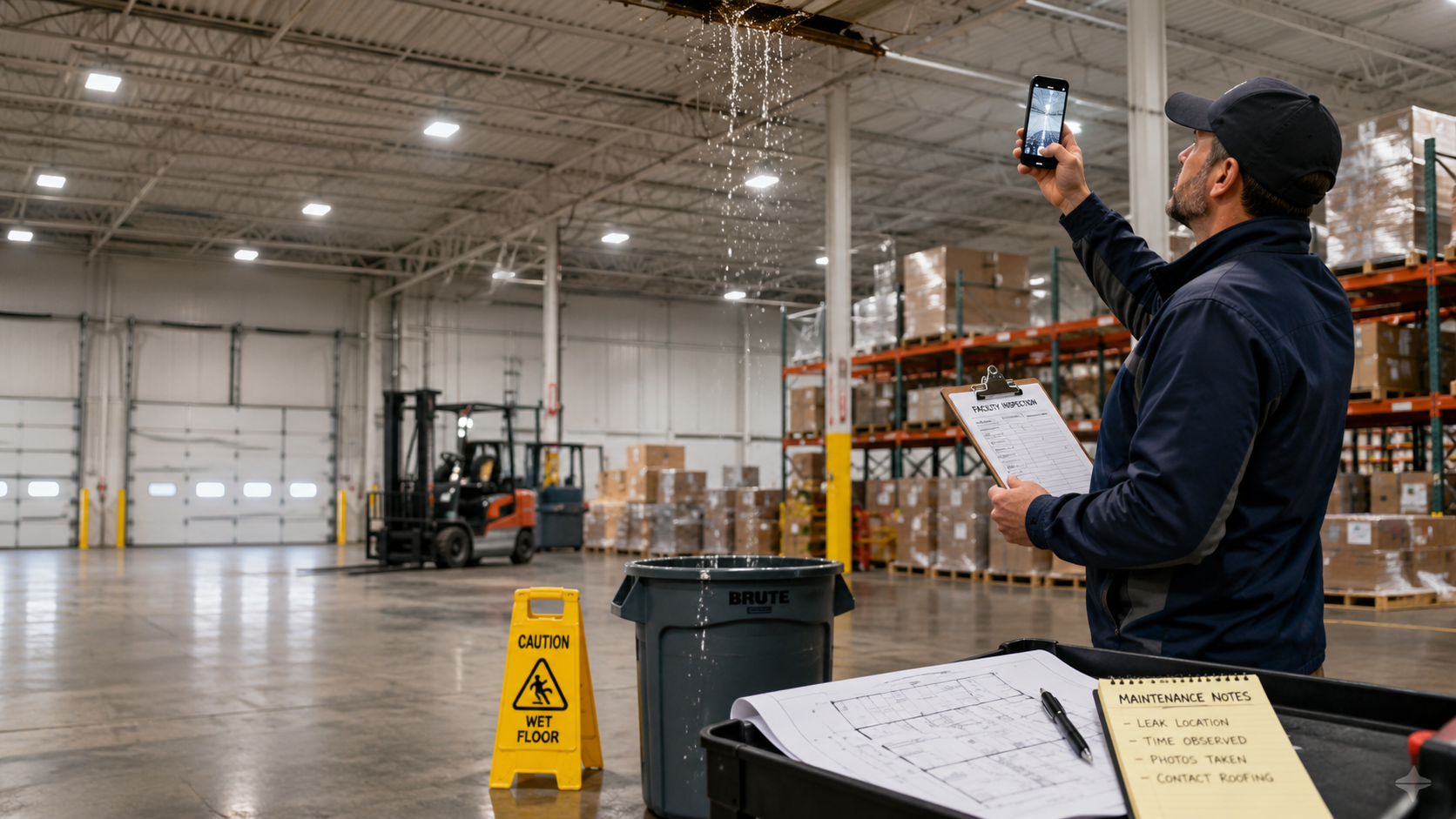
Start by protecting people and occupied areas. Move employees, tenants, visitors, and customers away from wet floors, dripping water, ceiling damage, and any area where electrical hazards may be present. Use cones, caution tape, signs, or other visible markers to help reduce slip risks.
Next, protect building contents when it is safe. Move inventory, documents, furniture, computers, tools, and other sensitive materials away from the leak area. If equipment cannot be moved, cover it with appropriate protective materials, but avoid creating new hazards around electrical systems.
Contain active water from inside the building. Place containers under drips when the floor can support them and when they do not block safe movement through the space. Do not puncture roof materials, climb onto the roof, or attempt temporary rooftop repairs. Wet roof surfaces, concealed damage, and severe weather can create serious safety risks.
Begin documenting the issue as soon as the area is safe. Take photos and notes that show where water is entering, what materials were affected, and how conditions changed over time. Clear documentation can help the roofing team understand the urgency and may support insurance, warranty, and maintenance records.
For broader planning after the immediate leak response, Schena’s commercial roofing resources can help facility teams understand maintenance, inspections, and commercial roofing considerations.
A Ten Step Commercial Roof Leak Response Checklist
- Move people away from wet floors, dripping water, and possible electrical hazards.
- Mark or block off affected areas to help reduce slip and access risks.
- Move inventory, files, equipment, and furniture when it is safe.
- Place containers under active drips without overloading ceiling areas.
- Do not climb onto the roof or attempt rooftop repairs.
- Photograph interior damage, active leaks, and affected materials.
- Record the date, time, weather conditions, and leak location.
- Notify building leadership, maintenance, and insurance contacts as needed.
- Call an emergency commercial roofing team for inspection and stabilization.
- Save all photos, invoices, notes, and repair updates in one location.
What Information Helps A Roofer Respond Faster
A roofing team can often respond more effectively when the first call includes clear, specific information. Facility managers should be ready to share the building address, the affected area, the type of space involved, the severity of the leak, and whether water is near electrical systems, equipment, inventory, or occupied areas.
Photos are especially useful. Capture wide photos that show the room or affected area, then take closer photos of active dripping, ceiling stains, wall staining, damaged materials, wet flooring, and any safe ground-level exterior observations. If the leak appears during a storm, note the timing, wind direction if known, rainfall intensity, and whether the problem has happened before.
Share what has already been done inside the building. Useful details may include whether materials were moved, containers were placed, nearby equipment was shut down, affected areas were blocked off, or internal teams were notified. Also share whether the leak is still active or whether water entry slowed after rain or snow stopped.
Avoid rooftop access, rooftop photos, and rooftop temporary repairs by internal staff. Avoid disturbing roof materials, drains, flashing, or mechanical units. Avoid describing the cause as certain unless a qualified roofing professional has inspected the condition. It is better to describe what you see, where water appears, and how quickly conditions are changing.
Schena’s service team can also help support documentation through inspection notes, photos, service history, and repair recommendations.
When To Call An Emergency Commercial Roofing Team
Call an emergency commercial roofing team as soon as water is actively entering the building, especially when the leak affects occupied areas, inventory, electrical systems, production areas, tenant spaces, or business operations. A small visible leak may indicate a larger issue above the ceiling or within the roof assembly.
After-hours support may be appropriate when water is spreading, interior damage is increasing, or the building cannot wait until the next business day. Severe weather can also make leak response more urgent, particularly after high winds, heavy rain, hail, rapid snowmelt, or suspected storm damage.
A professional roofer can assess the roof condition, identify likely entry points, provide temporary stabilization when conditions allow, and recommend repair options. Facility teams should focus on safe interior response and clear documentation until a qualified roofing team arrives.
For urgent help, contact Schena for emergency commercial roof repair https://www.schenaroofing.com/commercial-roofing-service/commercial-roofing-service-emergency-roof-repair-michigan/
Schena supports commercial roofing needs across southeast Michigan through its commercial roofing in Detroit service area and across West Michigan through its commercial roofing in Grand Rapids service area.
Michigan Notes That Can Affect Leak Response
Michigan weather can make commercial roof leaks harder to diagnose without a professional inspection. Water may enter one area of the roof assembly and appear somewhere else inside the building, especially when insulation, decking, ceiling cavities, or rooftop equipment are involved.
Freeze-thaw cycles can make small roof vulnerabilities more noticeable. Water may enter seams, flashing areas, penetrations, or minor openings, then expand as temperatures drop. The expansion can worsen existing conditions and make leaks more active during the next thaw or rain event.
Spring rains can reveal drainage concerns that developed during winter. Clogged drains, ponding water, blocked scuppers, and debris buildup may contribute to water movement across low-slope commercial roofs.
Wind events can affect edge details, membrane areas, rooftop penetrations, and sheet metal components. If a leak appears after high winds or a severe storm, a professional assessment can help determine whether damage occurred and what stabilization steps may be needed.
Professional inspections in spring and fall can help identify roof conditions before seasonal weather changes place more stress on the system. Additional checks may be appropriate when a severe storm occurred or damage is suspected.
Frequently Asked Questions
Should I Go On The Roof?
No. Facility managers, staff, and tenants should not go on the roof during or after a leak. Wet roof surfaces, storms, hidden damage, and active water movement can create serious safety risks. Document what you can from inside the building and safe ground-level areas, then contact a qualified commercial roofer.
What Should I Photograph?
Photograph active drips, ceiling stains, wet walls, damaged inventory, affected equipment, floor hazards, and any safe exterior views that show storm damage or drainage concerns. Include wide shots for context and closer photos for detail. Add timestamps and notes so the documentation can support service records, warranty questions, and insurance conversations.
When Should I Call A Roofer?
Call a commercial roofer as soon as you confirm active leaking, interior damage, recurring water entry, or suspected storm damage. Waiting can allow moisture to spread into insulation, ceiling assemblies, inventory, and occupied areas. Emergency service is especially important when water is near electrical systems, operations are disrupted, or the leak is expanding.
Get Help With A Commercial Roof Leak
A commercial roof leak needs a safe response, clear documentation, and a qualified roofing assessment. Schena can help with emergency response, leak investigation, repair recommendations, and documentation support for commercial facilities in Detroit, Grand Rapids, and across Michigan.
If water is entering your building, contact Schena for emergency commercial roof repair and keep all photos, notes, and service records together for the next step.