Choosing a commercial roofing system in Michigan starts with your building type, drainage design, rooftop equipment, lifespan goals, and budget planning. The right fit often depends on how the roof handles freeze-thaw cycles, wind exposure, water movement, service traffic, and warranty requirements across changing seasons.
Choosing a commercial roof in Michigan is rarely about finding one system that beats every other option.
A warehouse, school, office, healthcare facility, and manufacturing plant may each need something different from a roofing system, even when the buildings are in the same region. Some roofs need better support for drainage correction. Others may need stronger planning around rooftop equipment, longer-term budget goals, or a system that supports a recovery strategy.
That is why the better question is usually not, “What is the best commercial roof?” It is, “What roofing system best fits this building, in this climate, with these goals?”
In Michigan, the weather adds pressure to that decision. Freeze-thaw cycles, wind-driven rain, snow, ponding water, and spring storms can all affect a roof’s performance over time. This guide is built to help owners and facility teams narrow system direction based on practical factors that matter. For more planning guidance, visit our commercial roofing resources.
The Michigan Factors That Shape System Choice
Michigan weather can expose weak points in a roofing assembly faster than many owners expect. Roof systems that look similar on paper may perform very differently depending on drainage, attachment, edge details, insulation design, and service traffic.
Drainage
Drainage is often one of the most important parts of system selection. If water is slow to drain from the roof, that may affect membrane selection, tapered insulation planning, drain placement, and warranty expectations. In many cases, the question is not just what membrane to install, but how the full assembly can help move water more effectively.
Freeze-thaw
Michigan roofs may expand and contract repeatedly as temperatures swing. That movement can place stress on seams, flashings, penetrations, and transitions. A system that fits the building well and is installed with the right details may help reduce long-term wear from seasonal movement.
Wind uplift risk
Wind exposure matters across Michigan, especially on larger buildings, more open sites, and areas exposed to stronger storm patterns. Wind uplift risk may affect attachment method, edge securement, cover board selection, and deck-related decisions. That is one reason roof selection should be tied to the building and site, not just the membrane category.
Rooftop units and traffic paths
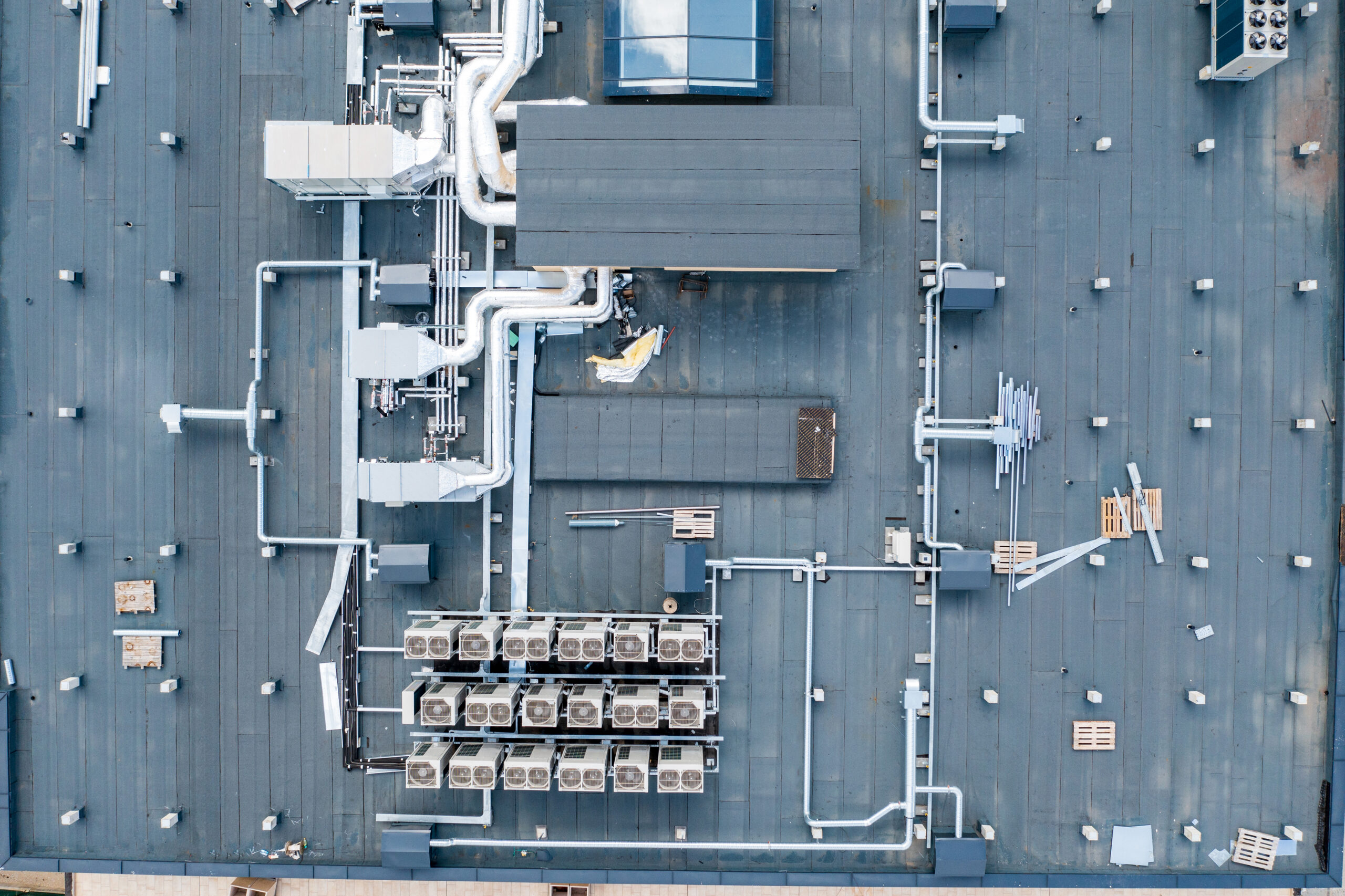
A roof with multiple HVAC units, frequent service traffic, conduit runs, and repeated access points often needs more attention than membrane selection alone. It may also need careful planning for walk pads, penetrations, flashing details, and service paths around heavily used areas.
Seasonal maintenance realities
Michigan commercial roofs should be inspected by a professional roofer twice each year, typically in the spring and fall. Those inspections can help identify drainage issues, flashing wear, seam stress, and damage that may follow winter weather or seasonal storms. If severe damage is suspected, an additional professional assessment may also make sense. Internal teams can support the process with on-the-ground observations and documentation, especially if they notice visible storm damage or signs of interior leaks.
The Building Details That Matter Most
Before comparing system types, it helps to look closely at the building itself. These details often shape the best direction more than product marketing does.
Building Type And Use
Building use matters.
A warehouse may prioritize cost control, serviceability, and coverage across a large low-slope area. A healthcare or education building may place greater emphasis on disruption control, long-term planning, and the protection of sensitive interior spaces. A manufacturing facility may need a roofing plan that accounts for rooftop equipment, service traffic, and interior conditions. A more visible building may also weigh appearance more heavily, especially if portions of the roofline are visible from grade.
The more the roofing plan reflects how the building operates, the more practical the recommendation usually becomes.
Drainage Design And Ponding Risk
If a roof has positive drainage, some system paths may remain open, becoming less attractive when water tends to sit on the surface. If the roof has recurring low areas, deflection, or known ponding, that condition should be addressed directly in the roofing plan.
In some cases, that may mean additional drains. In others, it may mean tapered insulation, slope correction, or pairing the assembly with details that better fit site conditions. A roofing system should not be expected to solve a drainage problem on its own.
Rooftop Equipment and Penetrations
Every rooftop unit, curb, vent, pipe, and support stand creates another detail that needs to be managed well. The more penetrations a roof has, the more important detailing and service planning become.
Buildings with heavy rooftop equipment or frequent contractor access often require a roofing approach that accounts for how technicians move across the roof, where wear tends to occur, and how future service work may affect the membrane and flashings. That does not point to a single universal system, but it does narrow down what may make sense.
How To Compare Commercial Roofing Systems
When owners search for the best roof, they can get pulled into product-versus-product arguments too early. A better approach is to compare systems based on the building’s actual needs.
Use this decision matrix to narrow system direction.
| Factor | What To Evaluate | What It May Point Toward |
| Building Type | Warehouse, office, school, healthcare, manufacturing, retail | Large low-slope buildings often lean toward flat roofing assemblies, while more visible rooflines or certain architectural conditions may support metal options |
| Drainage Design | Positive drainage, low spots, drain layout, tapered insulation needs | Roofs with drainage concerns may need slope correction, drain improvements, or an assembly that better fits those conditions |
| Rooftop Equipment | HVAC density, penetrations, service access, traffic paths | More equipment and traffic may raise the value of durable details, walkway planning, and service-friendly layouts |
| Lifespan Goals | Short hold period, long hold period, capital planning horizon | Long-term ownership may support stronger life-cycle planning, better insulation strategy, or a more durable assembly |
| Budget Planning | Lowest first cost, phased upgrades, long-term value | Some owners prioritize lower upfront cost, while others may benefit more from a system that supports fewer surprises and better long-term budgeting |
This matrix is meant to narrow system direction, not pick a winner without an assessment. The right recommendation typically comes after reviewing the roof condition, deck, drainage, penetrations, insulation, edge details, and ownership goals together.
Where Flat Systems and Metal Systems Often Fit
Flat commercial roofing systems often fit low-slope buildings with broad roof areas, multiple rooftop units, and drainage systems designed around internal drains, scuppers, or tapered insulation. Depending on the building, these assemblies may support options such as TPO, EPDM, PVC, modified bitumen, or related low-slope approaches. Click here to learn more about flat commercial roofing systems.
Metal roofing systems often fit buildings where slope, visibility, architectural appearance, long service life, or custom edge and wall details play a greater role. In some applications, metal may also support durability and design goals that align well with the building envelope as a whole. Learn more about commercial metal roofing systems.
The key point is that flat systems and metal systems often solve different problems. The better choice usually depends on what the building needs from the roof, not which category sounds stronger in a sales conversation.
Michigan Notes That Can Affect Your Roof Plan
- Freeze-thaw cycling may place repeated stress on seams, flashings, and transitions.
- Wind exposure can affect attachment strategy, edge securement, and cover board planning.
- Snow and ice can increase the importance of drainage, insulation design, and structural review.
- Spring storms may expose weak points around perimeter details, rooftop units, and drainage paths.
- Ponding water can affect performance expectations and may affect warranty terms for some assemblies.
- Reflective roof surfaces may still make sense in Michigan when owners are weighing rooftop temperature, energy use, and thermal movement.
- Buildings with frequent HVAC service often benefit from defined traffic paths and protective rooftop planning.
- Professional inspections in spring and fall can help owners plan repairs and budget more effectively.
If your property is in Southeast Michigan, visit our Detroit commercial roofing team. If you are in West Michigan, connect with our Grand Rapids commercial roofing team.
Frequently Asked Questions
Is TPO better than EPDM in cold weather?
Not by default. TPO and EPDM can both be strong options in Michigan when the full assembly fits the building, drainage, rooftop activity, and warranty goals. The better question is usually which system is a better fit for your building conditions and long-term plan.
How long do commercial roofs last?
Commercial roof life can vary based on system type, installation quality, drainage, service traffic, maintenance, and weather exposure. A roof that fits the building well and is supported by regular professional inspections may last longer and create fewer budget surprises than one selected mainly for first cost.
How do warranties affect system choice?
Warranties can shape more than paperwork. They may influence which components, edge details, approved assemblies, and maintenance expectations apply to the roof system. It is important to understand what is covered, what is excluded, and how drainage conditions, repairs, and future modifications may affect coverage.
Get A Roofing Recommendation That Fits Your Building
The best commercial roof for a Michigan building is usually the one that fits the structure, operations, drainage, service demands, and budget plan in front of you.
Schena Roofing can assess your existing roof, review system options, and recommend a practical path tailored to your building’s needs rather than a one-size-fits-all approach. If you are planning a replacement, recovery, or capital project, contact the team for an assessment and system recommendation tailored to your facility.