Commercial roof restoration often makes sense when the existing roof is still structurally sound and the issues are limited to surface wear, aging seams, or isolated problem areas. Full replacement is usually the better option when moisture is widespread, damage is deeper, or the roof has reached a point where restoration may not deliver dependable long-term performance.
Commercial roof decisions can affect far more than project cost. They can disrupt operations, your other planning timelines, and even risk uncovering conditions that expand the scope once work begins. For many facility leaders, the real question is not simply which option costs less today—it is which option makes the most practical sense for the roof you have, the building you run, and the risk you are willing to carry.
That is why this decision usually starts with the condition of the existing roof rather than assumptions. A roof that still has a sound base and limited moisture intrusion may be a strong candidate for restoration. A roof with widespread saturation, drainage issues, or failing components may need to be replaced to address the root cause. If you are comparing paths, Schena’s commercial roofing resources can help you understand the bigger picture before moving forward.
What Roof Restoration Usually Means
Commercial roof restoration usually means extending the life of an existing roof system without removing and replacing the entire assembly. In many cases, that includes targeted repairs, seam reinforcement, surface preparation, and the application of a restoration or coating system designed to improve performance and add service life.
This approach often appeals to facility leaders because it may reduce disruption, lower first cost, and shorten the project timeline compared with full replacement. It can also be a practical fit when the roof is aging but still fundamentally serviceable.
That said, restoration is not just a surface treatment. A sound restoration scope usually depends on proper evaluation, repair planning, and confirmation that the roof is a good candidate in the first place. If moisture is trapped below the surface, the substrate is compromised, or drainage issues are driving repeated failures, a restoration system may not solve the underlying problem.
For readers evaluating this path, Schena’s commercial roof restoration and coatings services in Michigan page gives helpful context on where restoration may fit within a broader roof asset strategy.
What Roof Replacement Usually Means
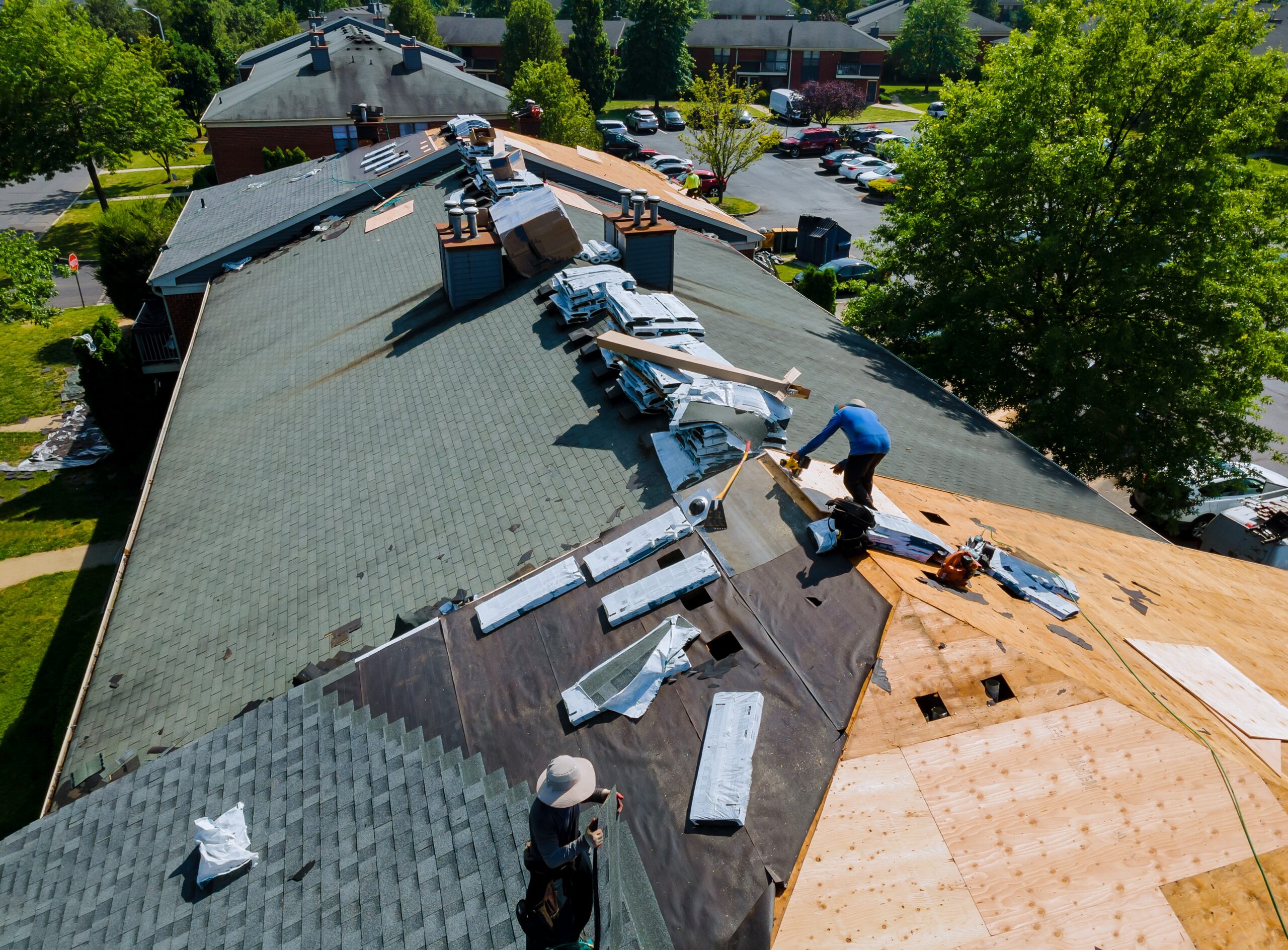
Commercial roof replacement usually means removing some or all of the existing roof system and installing a new assembly. Depending on the condition of the roof, this may include tear-off, replacement of wet insulation, repairs to substrate or deck components, updated flashing details, and system changes to improve drainage or long-term reliability.
Replacement often becomes the better choice when roof problems extend beyond the surface. If leaks recur across multiple areas, if insulation is saturated, if flashings and penetrations are failing widely, or if the roof has simply reached the end of its useful life, replacement may provide the clearer long-term answer.
This path typically involves more cost, more planning, and more coordination. It may also bring greater disruption to operations, especially where rooftop equipment, occupant schedules, or weather-sensitive processes are involved. Still, under the right conditions, replacement can help reduce repeated patching, uncertainty, and the cost of trying to preserve a roof that has little dependable life left.
The Factors That Decide Restore Vs Replace
The restore-versus-replace decision usually comes down to a handful of practical factors.
Roof condition is often the first one. If the roof still has a sound foundation and the visible problems are limited, restoration may be viable. If the damage is broad or the system is failing in multiple ways, replacement may make more sense.
Moisture is another major factor. A roof can appear repairable on the surface while still harboring wet insulation or hidden deterioration below. That is one reason a professional assessment matters before deciding on scope.
Drainage and ponding also matter. If water sits on the roof for long periods, the issue may go beyond surface treatment and require more extensive repairs.
The remaining service life should be weighed honestly. A restoration project may be a practical way to extend a roof that still has enough integrity to justify the investment. If the roof is already near the end of its useful life, replacement may be the more efficient use of capital.
Operational needs can also shift the answer. Some facilities need the least disruptive path possible. Others may prefer to address the issue more comprehensively now rather than continue managing repair risk.
Warranty considerations may also affect the decision. Not every roof qualifies for a restoration warranty, and existing conditions can limit available options.
The goal is not to force every roof into one solution. It is to match the solution to the system’s actual condition and the building’s needs.
Restore When Vs Replace When
Restore When
- The roof still has a sound substrate or deck.
- Leaks appear limited, and the failure points are identifiable.
- The membrane is aging but not broadly deteriorated.
- Moisture intrusion seems isolated rather than widespread.
- The priority is to extend service life with minimal disruption.
- Existing conditions support a restoration system and related warranty options.
Replace When
- The roof has widespread saturation or trapped moisture.
- The deck, substrate, or attachment condition is questionable.
- Leaks are recurring across multiple areas and details.
- Flashings, penetrations, or edge details need major rebuilds.
- Ponding or drainage problems require system-level correction.
- The existing roof has reached a point where restoration may not provide dependable value.
Risk Notes
- Restoration may lower cost, but hidden moisture can expand the scope once the investigation begins.
- Replacement often takes longer and may require more coordination around weather and building operations.
- Both paths can affect access for occupants, vendors, or equipment, though replacement is often more disruptive.
- Warranty options may depend on the existing roof condition, the scope of repairs, and the manufacturer’s requirements.
- If moisture remains in place, the roof may continue to underperform even if the surface appears improved.
- Tear-off can uncover additional conditions, such as damaged deck sections or failing edge components, that add cost.
- Budget planning should include contingency for surprises, especially on older buildings with a long repair history.
Michigan Notes That Can Affect Your Roof Plan
Michigan weather can shift roof decisions in ways that are easy to underestimate.
Freeze-thaw cycles may put repeated stress on seams, flashings, and vulnerable details. A roof that looks marginal in mild weather can become a bigger concern after another winter of movement, snow load, and moisture exposure.
Wind events can also change the picture, especially at perimeters and corners. In Southeast Michigan and West Michigan alike, edge security and detail integrity matter more when the roof is already aging. Readers in those service areas can learn more through Schena’s Detroit commercial roofing page and Grand Rapids commercial roofing page.
Drainage is another Michigan-specific concern. Snowmelt, spring rain, and extended periods of wet weather can expose ponding issues that may push a roof toward restoration rather than replacement or more extensive corrective work.
Rooftop units and penetrations often add complexity as well. Many commercial roofs in Michigan have been modified repeatedly over time, creating patchwork conditions that complicate restoration planning.
Seasonal scheduling also matters. Larger projects are often easier to plan from spring through fall, while winter conditions may narrow the practical installation window or slow the work.
For facility teams handling internal checks, the safest approach is to observe and document visible issues at ground level, such as interior stains, overflow, displaced materials visible from accessible areas, or storm-related concerns. Professional roof inspections are typically best scheduled twice a year, in spring and fall, with additional assessment only when severe damage is suspected.
Frequently Asked Questions
Can restoration extend roof life?
Yes, restoration can extend roof life when the existing roof is still a good candidate, and the project scope addresses the real points of failure. It is often most effective when the roof remains structurally sound and moisture intrusion is limited. The added service life can vary based on roof condition, system type, and repair needs.
What conditions disqualify restoration?
Restoration may not be appropriate when the roof has widespread trapped moisture, major substrate or deck issues, severe drainage problems, or broad failure at seams, flashings, and penetrations. It may also be a poor fit when the roof condition does not support a manufacturer-approved restoration assembly or warranty path. A documented professional assessment usually helps clarify that line.
How long does a restoration project take?
A restoration project is often faster than full replacement because it usually avoids full tear-off and may reduce disruption. The exact timeline depends on roof size, weather, surface preparation, repairs, moisture findings, and the complexity of rooftop details. The best way to plan accurately is to start with an assessment that defines both condition and scope.
A documented roof assessment can help turn this decision from a guess into a recommendation you can act on. Schena can evaluate current conditions, identify the most important factors, and provide a clear written recommendation to support budgeting, planning, and next steps with greater confidence.